Category
History
Events, movements and turning points that shaped Bengal.
-
Calcutta’s Baijis: Patronised by the Babus, Condemned by Society
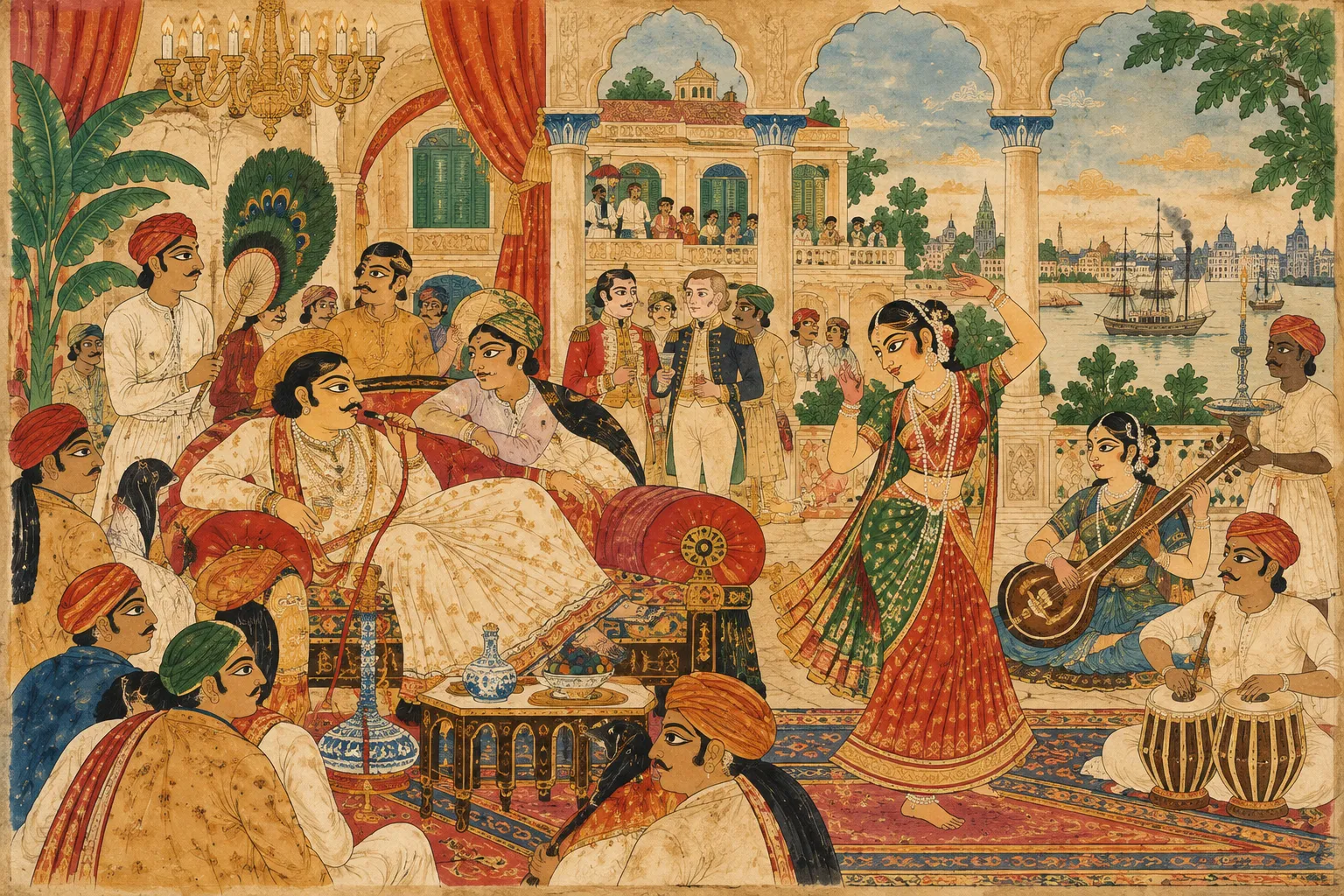
For decades, Calcutta’s wealthy households made Baijis central to their music, festivals and private entertainment. Then the Anti-Nautch Movement began to redefine the same women as symbols of moral decline. What changed—and why did the performers carry so much of the blame?
-
How New Money Became Old Power in Colonial Calcutta
How merchants, Company intermediaries and newly wealthy families turned colonial fortunes into land, prestige, cultural authority and dynastic power.
-
How Calcutta’s New Rich Became the Babus
The rise of a new Bengali elite in colonial Calcutta was not simply a story of money. Commerce, Company rule, landholding and cultural patronage transformed new fortunes into a distinctive social world known as Babu culture.
-
The Strange Business of Selling Leeches in Colonial Calcutta
From Bengal’s wetlands to colonial hospitals, medicinal leeches became a commercial supply. Discover the harvesters, contractors and medical demand behind this unusual nineteenth-century trade.
-
The Skeletons of Bengal That Taught the World Anatomy
From Calcutta’s workshops to medical classrooms across the world, the trade in human skeletons connected anatomical education to a hidden network of labour, commerce and contested human remains.
-
The Day the Bearers Put Calcutta Down
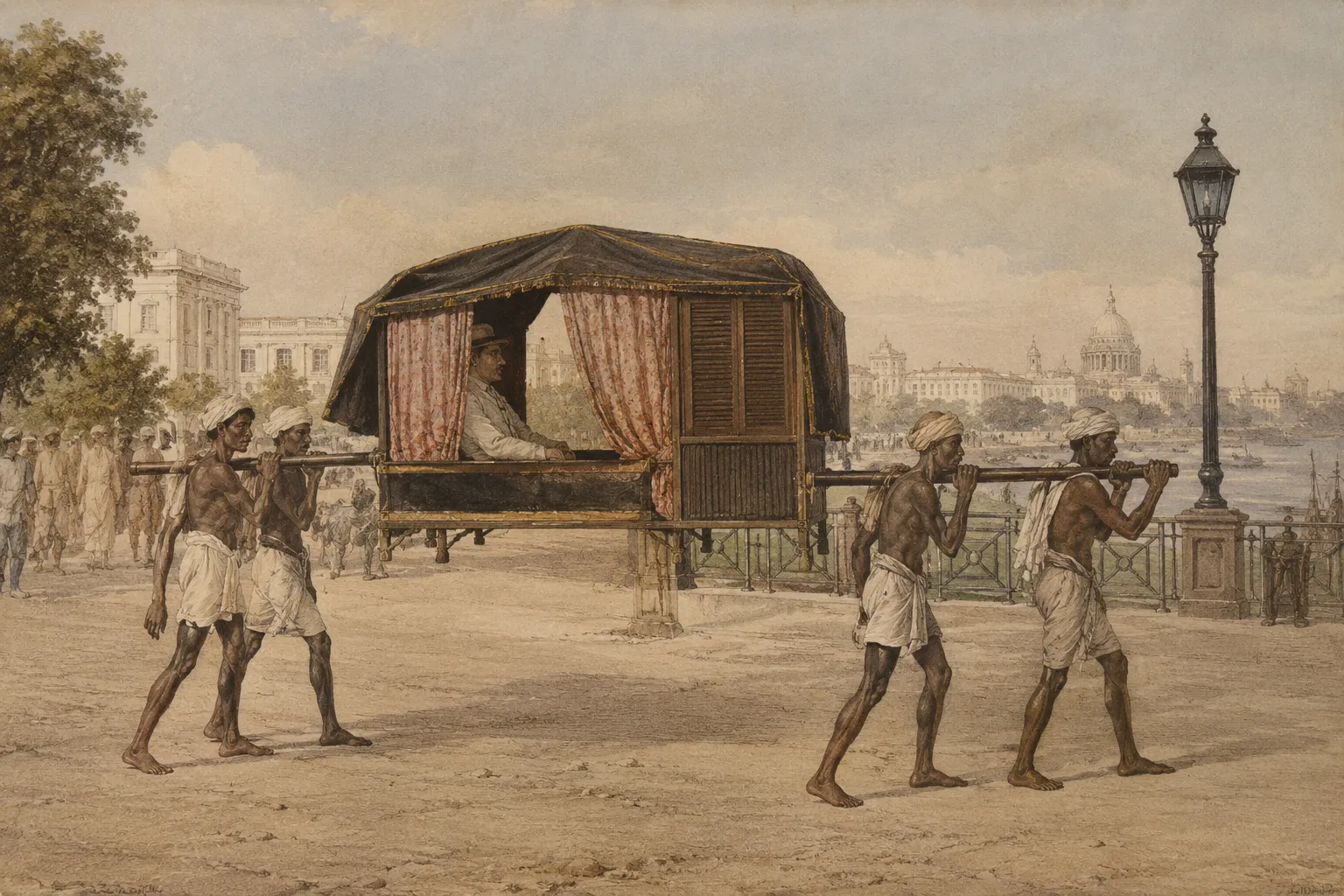
In 1827, Calcutta’s Oriya palanquin-bearers went on strike against colonial regulations, revealing the power—and limits—of collective action among the workers who carried the city.
-
The Ice That Crossed the World: From Massachusetts to Calcutta
In 1833, a ship carried a remarkable cargo from Massachusetts to Calcutta: more than a hundred tons of ice. Harvested from frozen New England lakes and shipped across the oceans, it became part of the city’s commercial and medical life. This is the story of the people, infrastructure and technology that made it possible to transport winter to the tropics.
-
How Do You Reconstruct a Ship That No Longer Exists?
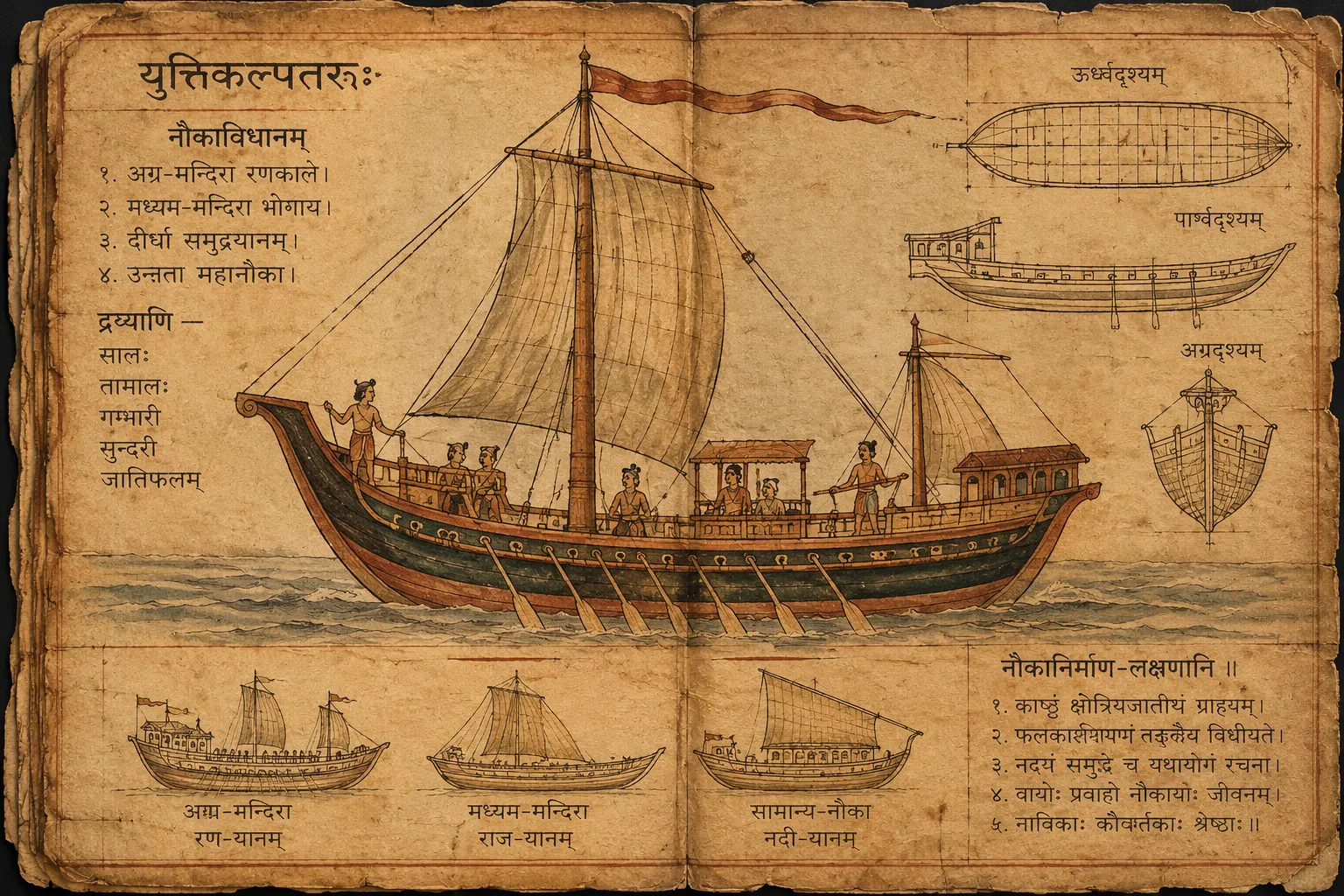
The ships of ancient Bengal have largely vanished, but fragments of their world remain—in terracotta images, ancient texts and shipbuilding traditions. Reconstructing them means piecing together these clues while distinguishing what the evidence reveals from what researchers can only infer. It is a journey into the possibilities and limits of recovering a lost maritime past.
-
The River Battles of the Ramacharitam
In the eleventh century, the Pala dynasty lost Varendra to a revolt led by a man named Divya, whose successors held the territory until Ramapala reclaimed it. The Sanskrit poem Ramacharitam preserves the memory of that struggle while weaving the king’s recovery into a literary narrative shaped by the story of Rama. It offers a window into medieval Bengal’s political conflicts and the courtly imagination that remembered them.
-
The Ancient Port We Can Still See in Terracotta
At Chandraketugarh, small terracotta seals preserve images of ships, inscriptions and clues to ancient maritime activity. One remarkable sealing has been interpreted as showing a horse aboard a vessel, while others connect ships with grain and voyages. These fragments offer a tangible glimpse of Bengal’s early maritime world—and a chance to investigate what the evidence can actually establish.
-
Bengal’s Navy Was Not Just a Navy
Bengal’s rivers shaped how its rulers fought, travelled and governed. Evidence from the Pala and Sena periods points to naval forces and specialized roles connected with vessels, ports and river crossings. The surviving records cannot establish the size of Bengal’s fleets, but they reveal a maritime world whose importance extended beyond the battlefield.
-
The Bengal–Indonesia Connection Nobody Talks About
In the ninth century, a ruler from the island world of Southeast Asia sought support from Bengal’s Pala emperor—not for a war or a territorial claim, but for a Buddhist monastery at Nalanda. A surviving copper-plate inscription records the exchange, offering a rare glimpse of how royal patronage and Buddhist institutions connected Bengal with a wider world across the Bay of Bengal.
-
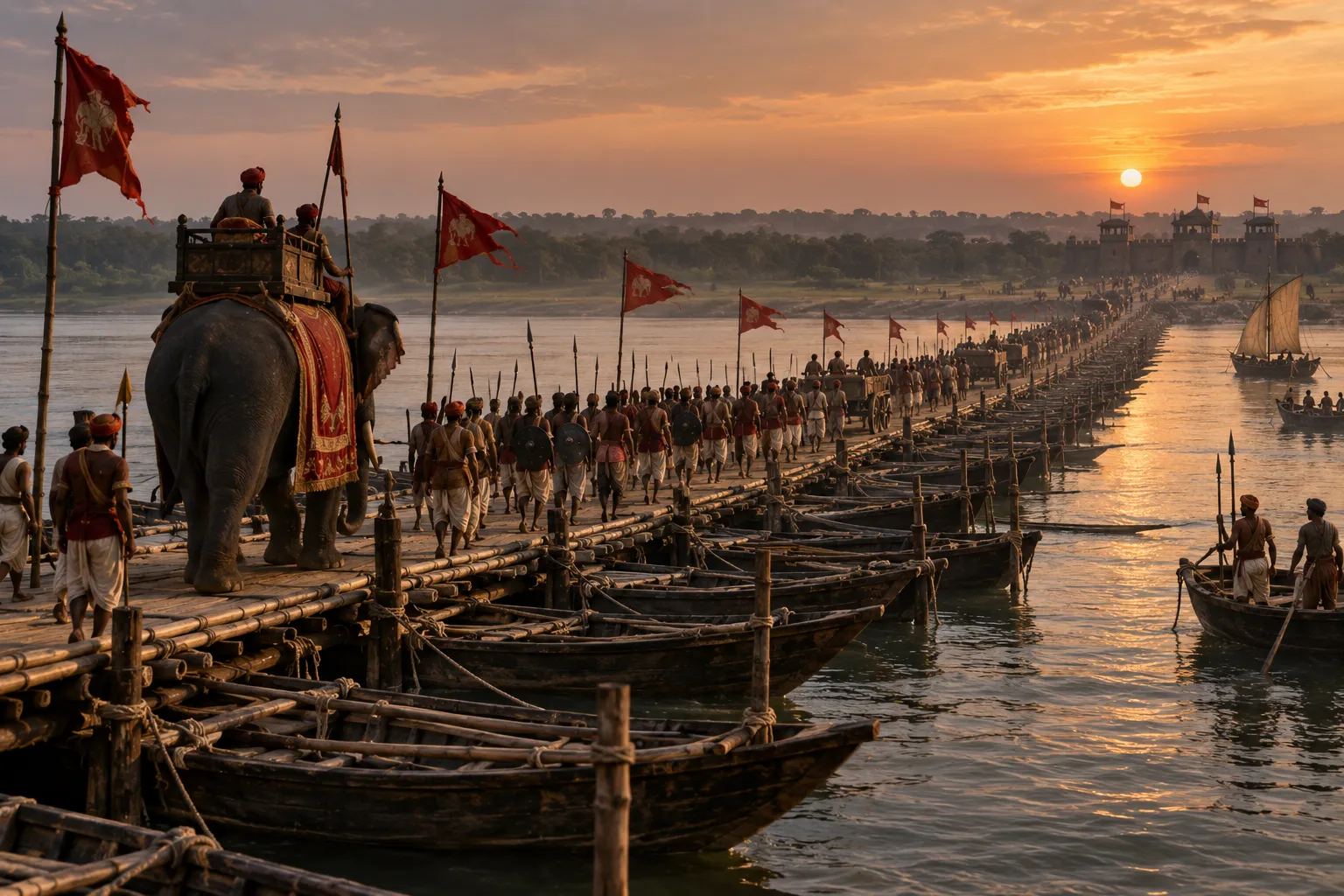
The Bridge Made of Boats
A river could stop an advancing army as effectively as an enemy force. Bengal’s military traditions preserve the idea of a Nau-Setu, or bridge made of boats: a temporary crossing that could connect waterborne transport with movement on land. Though its precise construction and use remain uncertain, the concept reveals how boats could become military infrastructure.
-
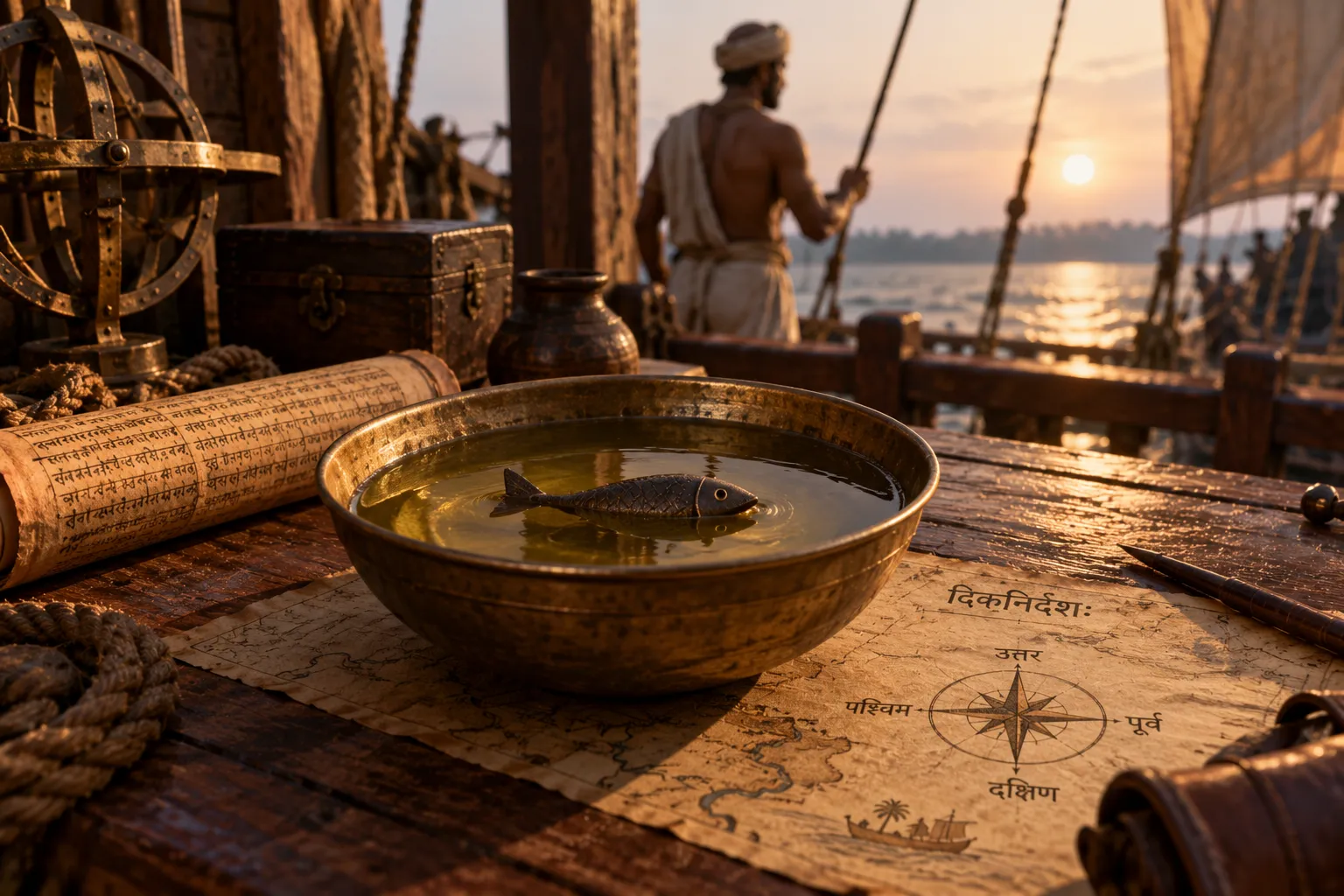
The Fish That Pointed North
An iron fish floating in oil was said to provide direction for sailors, but the intriguing Maccha Yantra raises a harder historical question: what exactly was this device, and did Bengali sailors actually use it as a compass? Surviving evidence supports a fascinating possibility, but not a simple story of a lost ancient navigation technology.
-
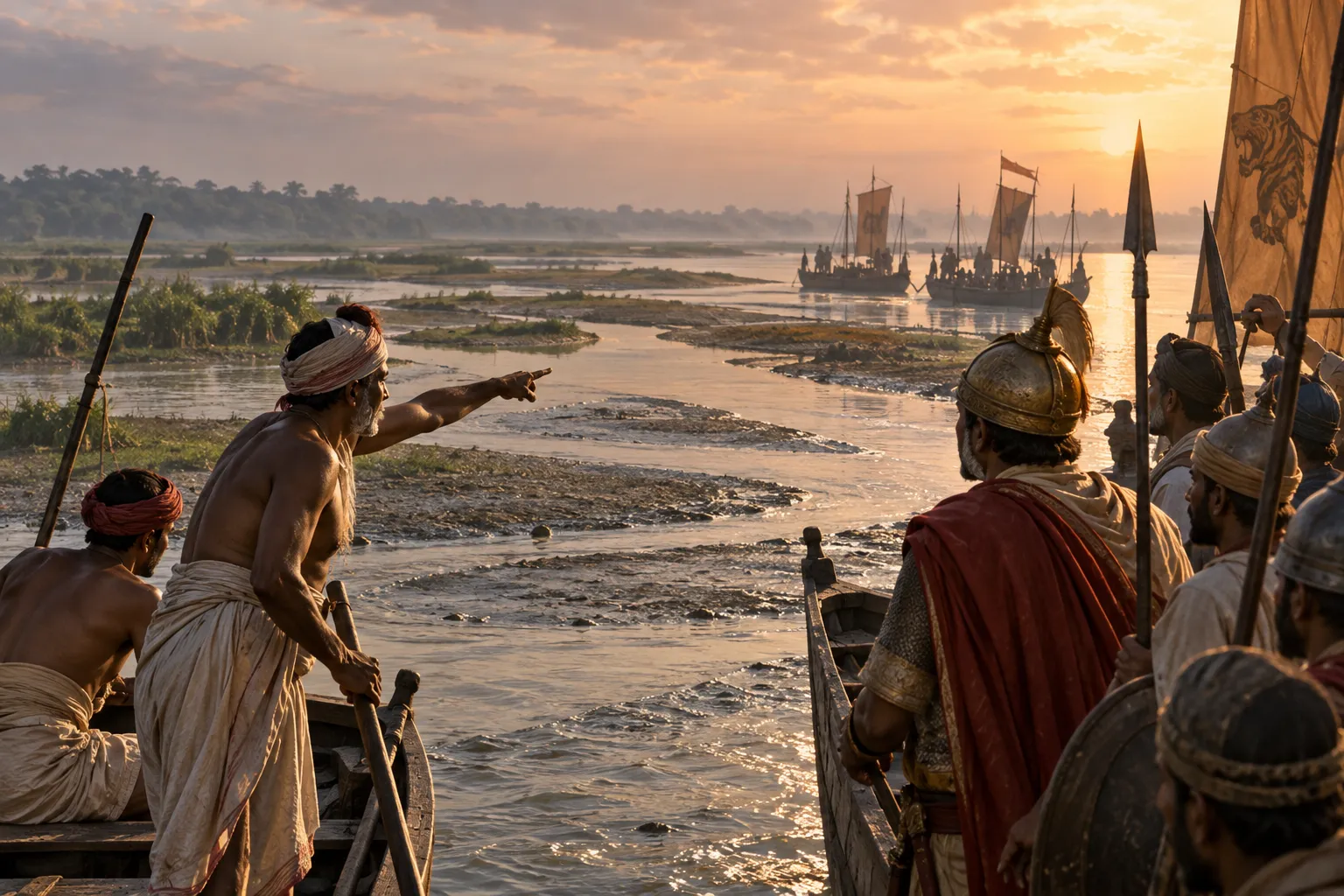
When a Fisherman's Knowledge Became Military Power
A river could be learned in ways no map could capture. For Bengal’s fishermen, boatmen and ferrymen, knowledge of shifting channels, crossings, currents and tides came from everyday work. In wartime, that practical expertise could become military intelligence, helping armies move through difficult waterways and giving local forces an advantage over outsiders unfamiliar with the delta.
-
The Chola Army Won. So Why Didn’t Bengal Fall?
Rajendra Chola I’s campaign into Bengal was a remarkable military success, but it did not produce lasting Chola rule. The expedition defeated Pala forces, reached the Ganges and returned with the spoils celebrated by Chola inscriptions. Yet Bengal’s political order survived, revealing a crucial distinction between winning a campaign and possessing a country.
-
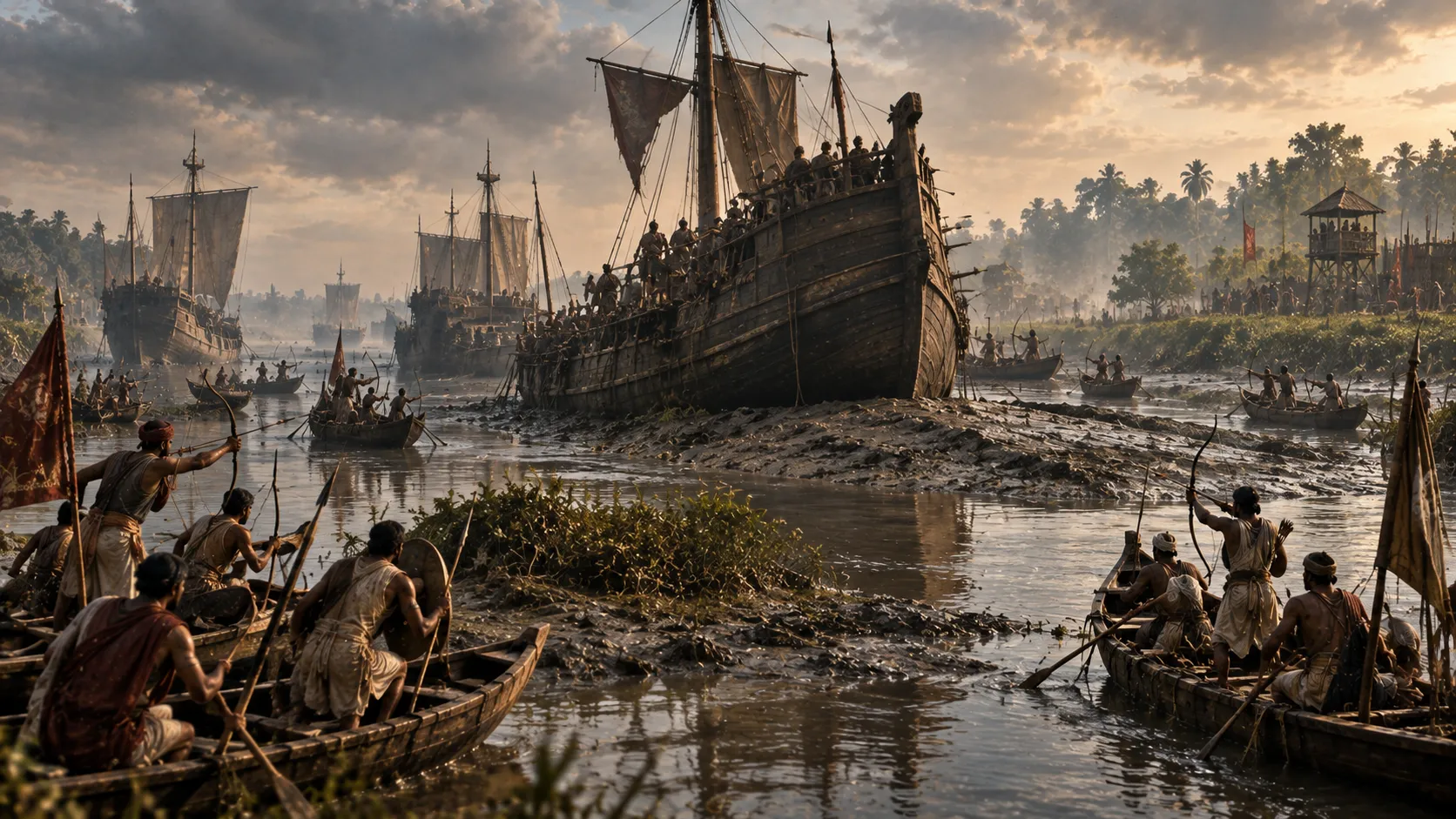
The War Bengal Fought With Mud and Tide
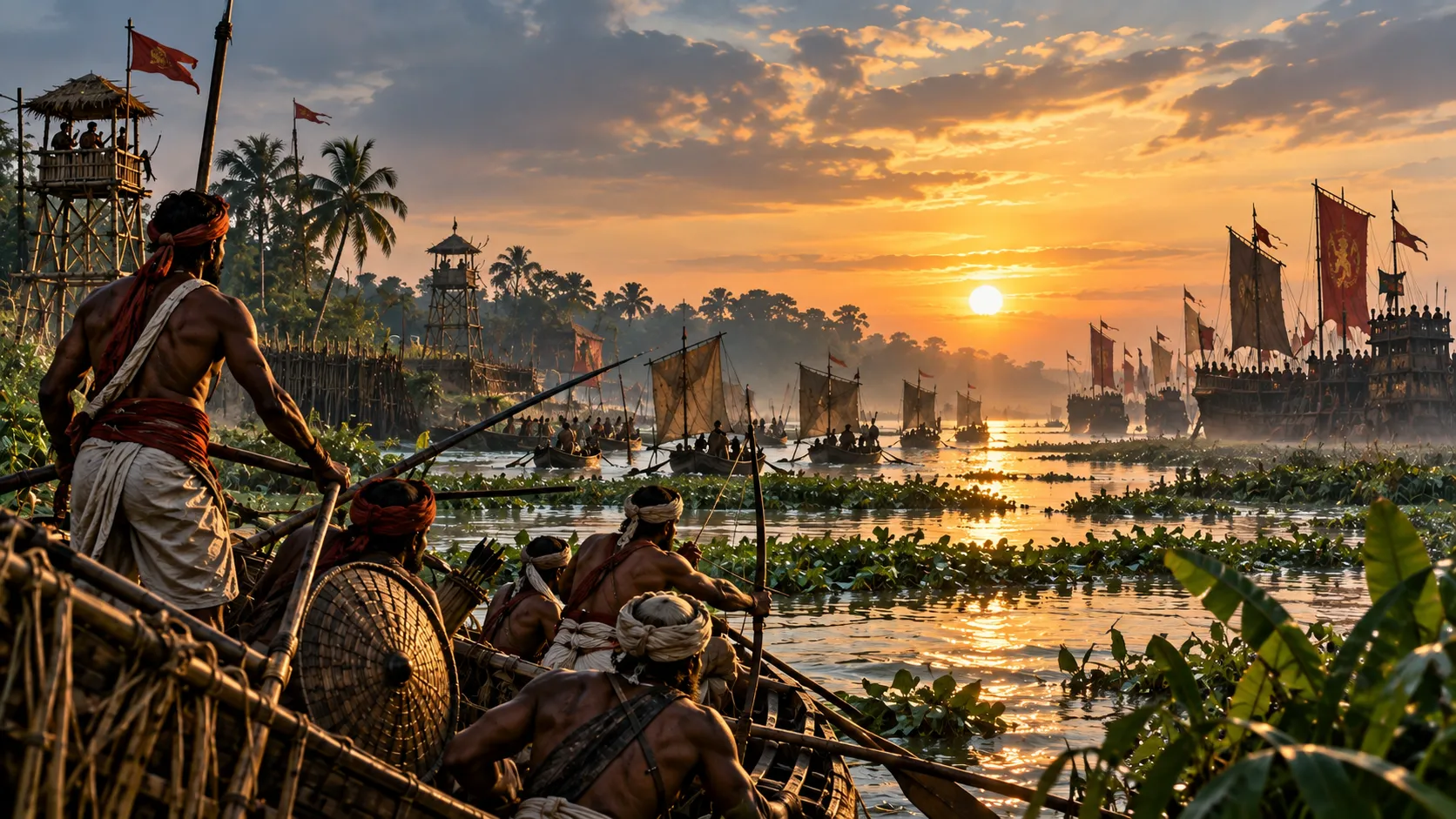
In Bengal's shifting waterways, mud, shallow channels and tides could transform the balance between an invading fleet and the people defending the delta. A reconstruction of how environmental knowledge could turn the river itself into a tactical advantage.
-
Why Alexander Never Reached Bengal
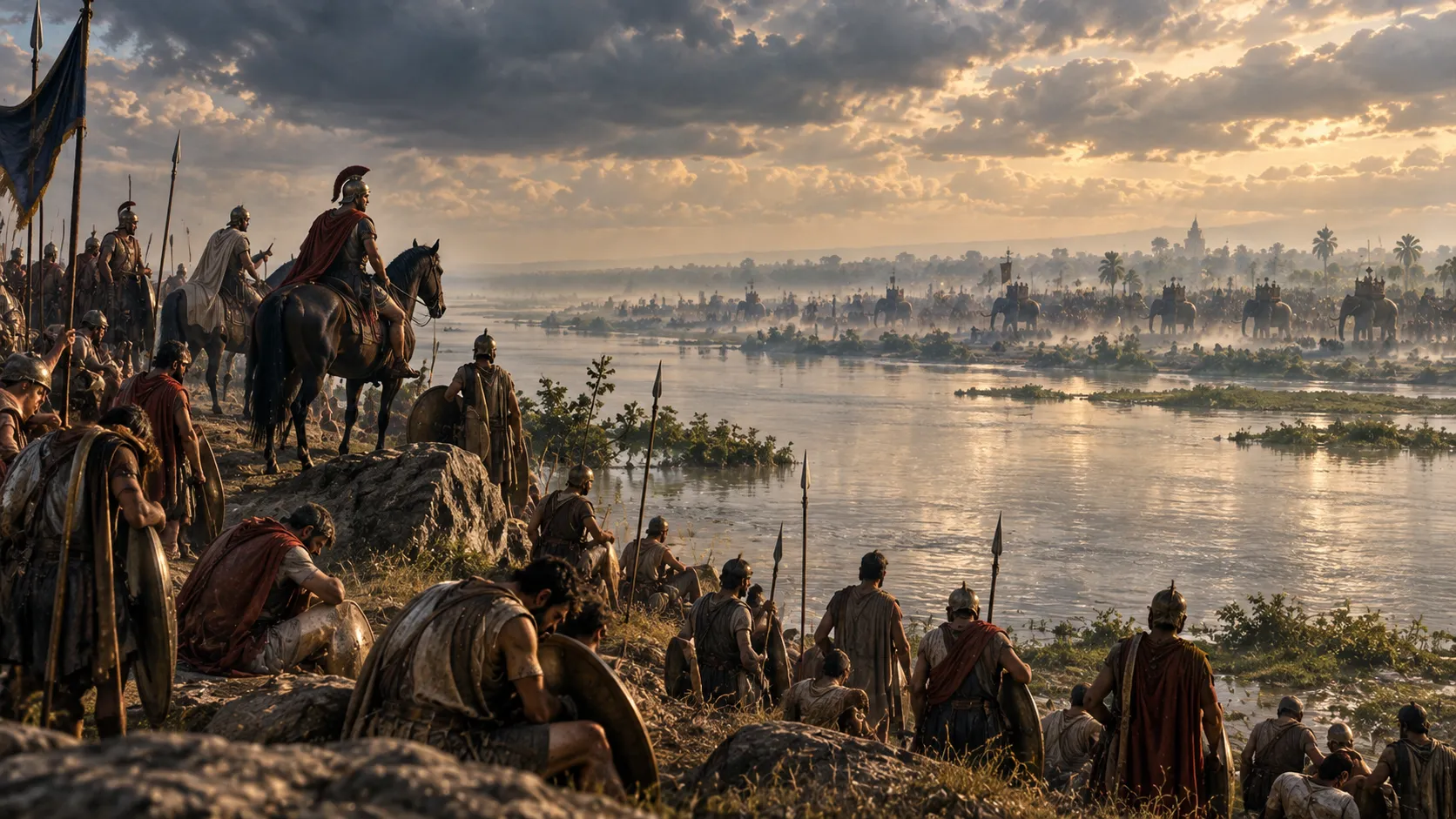
Alexander's army reached the Hyphasis in 326 BCE but never crossed into the Gangetic world. The Gangaridai were never defeated by him in battle, yet their reputation, the Ganges and the prospect of powerful eastern kingdoms formed part of the formidable frontier his exhausted army chose not to cross.
-
How Bengal Turned Its Rivers into Weapons
Bengal's rivers were more than waterways. In a shifting delta of channels, mudbanks, wetlands and tides, knowledge of the landscape could become a source of military power. From the Gangaridai to the Pala period, the relationship between Bengal's people, waterways and states reveals how geography could shape the terms on which armies moved, fought and attempted to control the region.
-
The River That Changed Bengal's Capital
As the Bengal Saraswati weakened and the Hooghly became more important, Bengal’s commercial geography shifted downstream. Saptagram gradually lost its advantage as changing river channels made navigation harder, while Hooghly emerged as a stronger centre for maritime trade. This environmental shift helped reshape the network of ports and settlements from which Calcutta eventually emerged.
-
The River That Made Saptagram
Saptagram, on the Bengal Saraswati, grew into one of medieval Bengal's great commercial centres, gaining administrative and mint status under Muhammad bin Tughluq and drawing Portuguese merchants like Tomé Pires by the sixteenth century. As the Saraswati silted and trade shifted to the Hooghly, the city's advantage and its fortunes gradually declined together.
-
The Private Papers Behind the Partition of Bengal
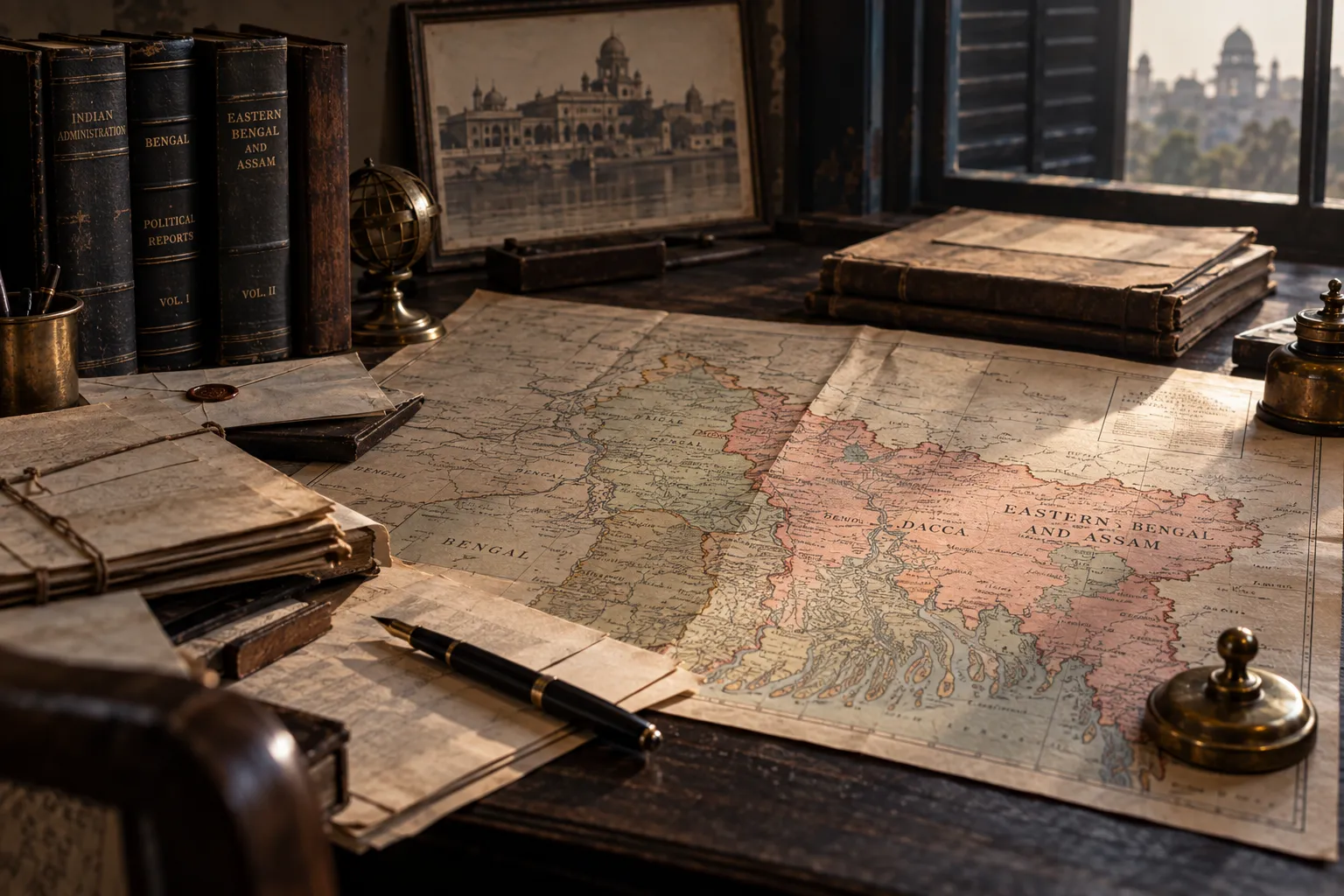
The British defended the 1905 partition of Bengal as an administrative necessity. But confidential correspondence among the officials shaping the new map reveals another consideration: they were thinking carefully about what might happen to Bengal’s political power once its eastern and western districts were no longer joined.
-
When Bengal Was Divided, Dacca Saw a Future
For many in western Bengal, the 1905 Partition looked like the destruction of a political homeland. In Dacca, some Muslim leaders saw something very different: a new province, a new capital and the possibility of political influence that had long seemed concentrated elsewhere.